Monster Merge Run
- 3.7
- Rating
- 1.00M
- Installs
- Free
- Price
 Analysis by App-foxy
Monster Merge Run is the kind of music game I can pick up for a short break without needing a long tutorial first. Its central idea is easy to understand: combine monsters, keep moving through challenges, and make quick decisions while the run develops. That simplicity is also its main appeal. I do not need to learn a complicated control scheme before enjoying a few attempts, yet the merge choices give each run enough direction to stop it feeling completely automatic.
After spending time with it, I see a game aimed at players who like light strategy wrapped in an accessible arcade format. It is not a traditional rhythm game built around tapping every beat, and it is not a deep monster-collection adventure either. The music category label makes sense in the way the game presents its action and pace, but the real experience is closer to a casual merge challenge with movement and progression layered together.
Monster Merge Run is free to play and comes from TSACom. It carries a Teen content rating, runs on devices using Android 7.1 or later, and its current version is 0.2.1. The game has already passed one million installs, while its average store score sits at 4.1 from roughly one thousand ratings. Those figures suggest a sizeable audience, although I would still judge it by the way its short-session gameplay fits my own habits rather than by popularity alone.
You May Also Like

 Blood Strike: 2.5 Anniversary
Blood Strike’s Loadouts Turn Every Drop Into a Tactical Gamble
A close look at Blood Strike’s custom loadouts: how fast access to signature weapons reshapes its battle royale rhythm, rewards preparation, and narrows the gap between fights.

 Pandora - Music & Podcasts
Pandora’s Music Is Easy to Start, but Harder to Recover
Pandora’s strength is its low-effort path from a seed to a station. Its weak spot is how much confidence it asks you to place in connection, setup, and quiet recovery.

 8 Ball Pool
 Is Built on Rivalries, Rematches, and Routine
A close look at the rivalries, rematches, shared routines, and unanswered safety questions that turn a quick pool match into a persistent mobile community.

 Samsung Music
’s Quiet Strength Is Playing What You Already Own
Its reach comes less from spectacle than from dependable access to a personal library. That simplicity is both the app’s strongest retention engine and its ceiling.

 AccuWeather: Weather Radar
AccuWeather Review: A Quick, Clear Forecast for Everyday Decisions
For everyday plans, the best forecast is the one you can understand quickly. AccuWeather makes rain timing, radar, and local conditions easy to act on, with a few trade-offs.

 Hill Climb Racing
Why Hill Climb Racing Still Turns Crashes Into One More Run
A tiny car, a bumpy hill and one more upgrade: Hill Climb Racing keeps resurfacing because its simple chaos makes every near-miss feel personal.
More From Our News Desk
View All News


How a normal run feels from the first move
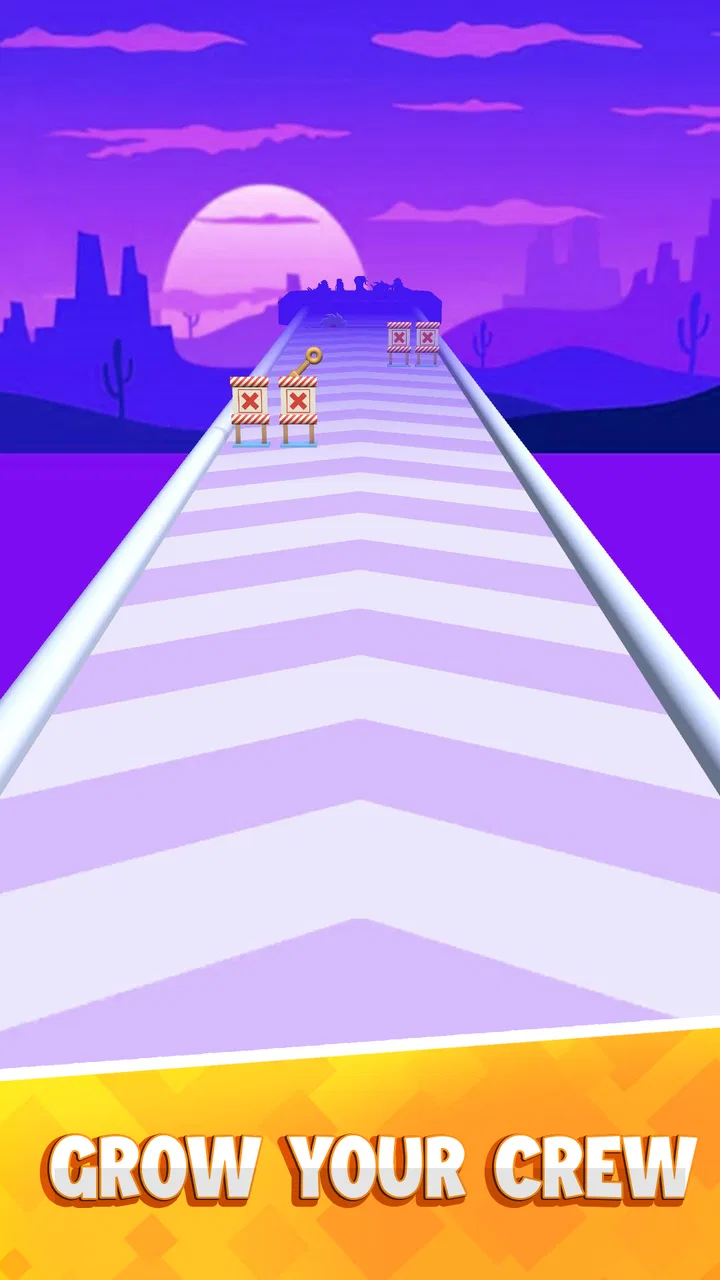
The baseline workflow is pleasantly direct. I start a run, watch the path ahead, look for useful merge opportunities, and try to keep the monster moving through the next challenge. The important mental shift is to avoid treating every available merge as automatically good. A larger monster may be attractive immediately, but using the wrong combination at the wrong moment can leave the run less flexible than it was before.
That gives the game a small but meaningful layer of planning. I found myself scanning slightly ahead instead of reacting only to what was directly in front of me. When the route becomes busy, the best decision is often the one that preserves a future option rather than the one that produces the biggest visible result right now. This is a useful habit for beginners because it makes the game feel less random without pretending that every outcome is fully under their control.
The controls are best approached with calm, deliberate movements. Rushing because the screen looks crowded can cause an avoidable mistake, especially when two possible actions appear close together. I get better results when I decide what I want to merge before making the movement, then commit once rather than correcting repeatedly. That sounds basic, but it is the difference between a controlled run and a sequence of panicked reactions.
For an everyday example, I can imagine playing during a commute or while waiting for food. One attempt is short enough to fit into an otherwise empty few minutes, and the rules are simple enough that I do not need to rebuild my understanding after putting the phone down. If I have more time, I can repeat the run and try a different approach. That repeatability is more important here than a large amount of story or character development.
The music presentation helps maintain momentum, but I would not choose this title expecting the precise beat-matching of a dedicated rhythm game. Players who want songs to determine every input will probably find more satisfaction in a conventional tap-to-the-beat alternative. Monster Merge Run works better for someone who likes the atmosphere and pace of music-themed play while focusing mainly on merging, positioning, and surviving the route.
What I would check before playing seriously
There is no reason to overcomplicate the first few sessions. I recommend learning the basic relationship between movement and merging before trying to optimize anything. The early goal should be consistency: identify what can combine, understand how the monster responds, and notice which mistakes end a run or make the next section harder. Once that feels natural, the game becomes more interesting because attention can move from control to planning.
I also pay attention to the visual presentation before increasing my pace. If several objects look similar, I slow down and confirm the target rather than assuming that the nearest option is correct. This is one of the more practical lessons the game teaches: visual clarity matters as much as speed. A fast input that selects the wrong object is not really faster.
Because the title is free, it is easy to test without making a commitment. That makes it a reasonable option for families or casual players who want something immediately understandable, although the Teen rating means parents should still consider whether its presentation suits a younger player. I would not hand it to someone solely because it uses monsters and bright arcade-style action.
Settings and device habits worth checking
Experienced players often look for a settings menu before blaming themselves for inconsistent controls. In this game, I would check the available audio and control options first, then adjust the phone rather than assuming the default setup is ideal. Music can help maintain a steady pace, but if it distracts me from visual cues, lowering it is sensible. Conversely, playing with sound on can make the session feel more energetic and help separate the game from background noise.
I also recommend checking whether the device is using a battery-saving mode or an unusually aggressive touch setting. Those are not special features of the game, but they can affect how a fast casual title feels. A player who experiences delayed input should test the same action when the phone is not busy with other tasks before deciding that the controls are poor.
Screen cleanliness matters more than I expected. Merge decisions depend on seeing small differences quickly, and fingerprints or glare make crowded moments harder to read. I get a more reliable result when I hold the device comfortably and avoid playing with one hand if the route requires repeated directional corrections. The game is casual, but casual does not mean that posture and visibility are irrelevant.
Another useful routine is to begin each session with one deliberately slow run. I use it to reacquaint myself with the movement, notice whether the phone feels responsive, and remember the visual spacing of the current challenge. This costs almost no time and prevents the common mistake of starting at full speed after a long break.
Faster patterns that actually help
The most effective speed improvement is not simply moving faster. It is reducing unnecessary decisions. I try to read the next section while finishing the current one, so I already know whether I want to preserve a monster for a later merge or use it immediately. This creates a smoother rhythm and makes the run feel less like stop-and-start problem solving.
A second useful pattern is to avoid filling every available opportunity. When two merges are possible, I compare their consequences rather than their immediate size. The better choice may be the one that leaves a clearer route or keeps a useful piece available. This is a non-obvious trade-off because the game encourages visible progress, while good play sometimes means refusing the most obvious combination.
I also find it helpful to separate learning attempts from score-focused attempts. During a learning run, I deliberately test a route or merge even if it may fail, because the information is valuable. During a focused run, I stop experimenting and repeat the safer pattern. Mixing both goals at once leads to frustration: a failed experiment can feel like a bad performance when it was actually useful practice.
Short sessions make this approach practical. Rather than playing until I become careless, I prefer a few concentrated attempts with a clear purpose. One run might be about reading the path, another about preserving merge options, and a third about maintaining speed. This gives each attempt a measurable lesson without inventing a complicated training system around a simple game.
Players who use sound should treat it as pacing support, not as a substitute for watching the screen. If the audio creates a comfortable tempo, I can use that feeling to avoid erratic movements. However, I still verify every merge visually. That distinction is important for anyone arriving from rhythm games, where listening closely may be enough to anticipate the next input.
Where the advanced play reaches its limits
Monster Merge Run rewards better habits, but I would not mistake those habits for a deep competitive system. Its appeal comes from the combination of accessible movement and light planning, not from a large strategic vocabulary. Once I understand the strongest repeatable choices in a section, the challenge can shift toward execution and patience rather than continually revealing new layers.
That limitation will matter to different people in different ways. If I want a relaxing game that gives me a reason to replay a short route, the compact design is a strength. If I want extensive customization, a large roster with complex abilities, or a long-term progression structure, I would look elsewhere. A traditional monster battler offers more collection depth, while a dedicated merge puzzle usually provides more deliberate board planning. A rhythm game, meanwhile, offers more exact musical timing.
The game’s current version, 0.2.1, also makes me approach it as a relatively early experience rather than a finished replacement for every other game in the category. That is not a criticism of the basic idea. It simply means I value the core loop on its own terms and would not expect it to provide the breadth of a mature, content-heavy title.
Another limitation is that the simple premise can make mistakes feel repetitive if I do not vary my approach. The solution is not to force complexity where it does not exist. Instead, I set a small objective for each attempt: cleaner movement, fewer unnecessary merges, or better anticipation of the next section. Without that personal structure, a run can become a routine sequence rather than an engaging challenge.
I would also skip it if my main requirement is a fully music-driven experience. The category may attract players searching for songs, beats, and timing mechanics, but this game’s identity rests more on its monster-merging run than on precise musical performance. It is a better fit for someone who enjoys music-themed casual play and wants a little decision-making between bursts of action.
Who should download it and who should pass
I would recommend it to casual players who enjoy quick attempts, simple rules, and a small amount of planning. It is especially suitable for someone who likes the satisfaction of combining objects but wants more movement than a stationary merge board usually provides. The free price makes experimentation easy, and the broad install base indicates that it has found a substantial audience.
It may also suit players who dislike long tutorials. I can understand the basic objective quickly, then improve through repetition. That makes it friendlier than a complex strategy game when I only have a few minutes available. The best experience comes from accepting that each run is a compact challenge, not expecting a huge adventure to unfold immediately.
I would advise rhythm-game specialists to try it with adjusted expectations. If the appeal is exact timing, recognizable song structure, and a strong performance score, another music game will probably be a better purchase of attention. Likewise, dedicated merge fans who want a large board and careful multi-step planning may find the running format less satisfying than a classic puzzle alternative.
For younger players, the Teen rating deserves attention before installation. The monster theme may look playful, but the age classification is the relevant guide for deciding whether it belongs on a particular device. I would also suggest that new players use a comfortable screen setup and begin slowly, because rushed input is the most avoidable source of frustration I encountered.
My verdict after building a repeatable routine
My strongest impression is that Monster Merge Run succeeds when I treat it as a focused snack-sized game. I start with a slow read, choose merges for their future value, keep my movements clean, and stop before repetition turns into careless play. That routine makes the simple mechanics feel more purposeful and gives me a reason to retry a section without pretending that the game is a deep strategy simulator.
The main strengths are its approachable premise, quick learning curve, and useful balance between movement and merging. The main weaknesses are equally clear: players seeking extensive content, advanced collection systems, or strict rhythm gameplay may outgrow it quickly. Its current 0.2.1 release feels best judged as a compact casual experience rather than as a complete answer to every kind of music-game preference.
In the end, I would keep it installed for short breaks and relaxed repeat attempts. I like that a few minutes can produce a complete little session, and I appreciate the way careful planning improves results without requiring a manual full of rules. If you want a free, easy-to-start monster merge game with light strategy and an active run format, it is worth trying; if you need deep progression or true beat-matching, choose a more specialized alternative instead.
FAQs for Monster Merge Run
01What is Monster Merge Run and how does it work?
Monster Merge Run is an engaging mobile game that combines elements of merging and running genres. Players merge different monsters to create stronger ones and use them to race through various obstacles. The objective is to continuously evolve your monsters to improve your performance in increasingly challenging levels.
02Are there in-app purchases in Monster Merge Run?
Yes, Monster Merge Run offers in-app purchases. Players can buy various items such as special boosters, extra lives, and unique monsters to enhance their gameplay experience. While the game is free to download, these purchases can provide an advantage by accelerating progress.
03Does Monster Merge Run require an internet connection?
Monster Merge Run can be played offline, allowing users to enjoy the game without an internet connection. However, certain features, such as accessing leaderboards or making in-app purchases, will require connectivity. Players can still enjoy the core gameplay without needing to be online constantly.
04How does Monster Merge Run handle user data and privacy?
Monster Merge Run is committed to protecting user privacy. The game collects minimal data necessary for gameplay, such as progress and achievements. Users should refer to the app’s privacy policy for detailed information about data handling practices and to understand how their information is protected.
05Is Monster Merge Run suitable for children?
Monster Merge Run is suitable for players of all ages, including children. The game features colorful graphics and simple mechanics that are easy to understand. However, parents should be aware of the in-app purchases and consider setting up parental controls to manage spending.
Pros
- Engaging gameplay with strategic elements.
- Visually appealing graphics and animations.
- Simple controls suitable for all ages.
- Frequent updates with new levels.
- No intrusive ads during gameplay.
Cons
- Requires internet connection to play.
- Occasional lag on older devices.
- Limited character customization options.
- In-app purchases can be pricey.
- Energy system limits playtime.

Monster Merge Run
Gallery